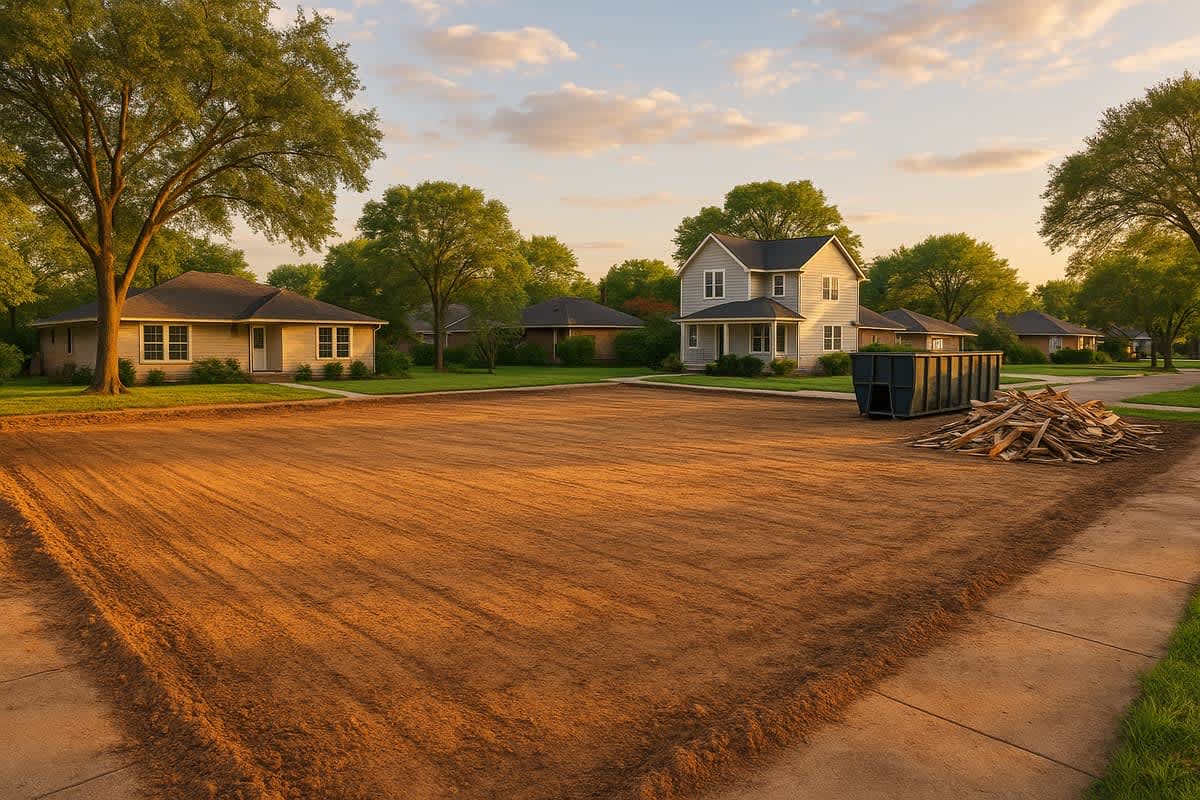
How much does it cost to demolish a house?
How much does it cost to demolish a house?
$6,000 – $25,500 average total cost
$4 – $17 per square foot
$14,000 national average

Average cost to demolish a house
The national average cost to demolish a house is roughly $14,000, though most homeowners spend between $6,000 and $25,500 for a standard 2,000-square-foot property. Costs are primarily driven by the home's size, location, presence of hazardous materials, and any additional structures like garages, decks, or pools that need to come down with the main house.
| Cost Metric | Amount |
|---|---|
| National average | $14,000 |
| Typical range | $6,000 – $25,500 |
| Cost per square foot | $4 – $17 |
| Low-end (light demo) | $3,000 |
| High-end (full knockdown) | $35,000+ |
Whether you're clearing the lot to build a new home, replacing a dilapidated structure, or converting the land to another use, understanding the full scope of demolition costs helps you budget accurately. Below, we break down every line item that goes into tearing down a house.
House demolition cost by square footage
Square footage is the single biggest factor in determining demolition costs. Most contractors price the job at $4 to $17 per square foot, depending on the complexity and location. Larger homes naturally require more labor, heavier machinery, and longer cleanup times, all of which drive the price up.
| Home Size | Average Demolition Cost |
|---|---|
| 1,000 sq. ft. | $4,000 – $17,000 |
| 1,200 sq. ft. | $4,800 – $20,400 |
| 1,500 sq. ft. | $6,000 – $25,500 |
| 2,000 sq. ft. | $8,000 – $34,000 |
| 2,500 sq. ft. | $10,000 – $42,500 |
| 3,000 sq. ft. | $12,000 – $51,000 |
The median home in the U.S. is about 1,886 square feet, which puts typical demolition costs between $7,544 and $18,860. Multi-story homes often cost more per square foot because they require more careful sequencing and additional safety measures during teardown.
Demolition pricing varies significantly between contractors. Request at least three written estimates that itemize labor, equipment, permits, disposal, and any hazardous material abatement so you can compare costs accurately.
Partial demolition costs
You don't always need to level the entire structure. Partial demolition targets specific areas or features of a property, such as a garage, deck, pool, or chimney. These projects cost considerably less than a full teardown and are common during major renovation or remodeling work.
| Structure or Feature | Average Demolition Cost |
|---|---|
| Patio or deck | $1,500 – $2,800 |
| Detached garage | $1,000 – $5,000 |
| Driveway | $600 – $1,800 |
| In-ground swimming pool | $4,000 – $16,000 |
| Concrete foundation | $2,000 – $6,000 |
| Chimney | $500 – $6,000 |
In-ground swimming pools sit at the top of the partial demolition price list because they involve breaking up thick concrete or fiberglass, hauling away large volumes of debris, and backfilling the hole. Chimney removal costs range widely based on whether the chimney runs through the center of the home or sits on an exterior wall.
If you're removing an interior wall to open up a floor plan, expect to pay $1,200 to $5,000 depending on whether it's a load-bearing wall. Load-bearing walls require temporary supports and structural engineering, which adds to the bill.
Factors that affect house demolition cost
Several variables push demolition costs above or below the national average. Understanding each factor helps you anticipate the final price and avoid surprise charges.
| Factor | Impact on Cost |
|---|---|
| Home size | Larger homes cost more due to increased labor, equipment time, and debris volume |
| Location | Urban and high-cost-of-living areas are more expensive than rural locations |
| Hazardous materials | Asbestos and mold abatement can add $2,000 – $20,000+ |
| Foundation type | Concrete slab and full basement removal increases cost significantly |
| Permits and inspections | Permit fees vary by municipality, typically $200 – $1,000+ |
| Additional structures | Garages, pools, and decks add to the total |
| Debris disposal | Landfill and hauling fees vary by region |
| Accessibility | Tight lots or homes near other structures require more precise (costly) methods |
Home size and layout
Size is the primary cost driver. A 1,200-square-foot ranch is far quicker to demolish than a 3,000-square-foot two-story colonial. Multi-story homes also require top-down demolition sequencing, which adds time and safety costs.
Location
Demolition in dense urban areas tends to cost 20% to 40% more than in rural settings. Tight lot lines, traffic management, noise ordinances, and higher disposal fees all contribute. States with a higher cost of living, like California, New York, and Massachusetts, consistently see above-average demolition pricing.
Hazardous materials
Homes built before 1980 may contain asbestos in insulation, floor tiles, or siding. Lead paint is common in homes built before 1978. Both require specialized abatement crews, protective equipment, and regulated disposal methods.
Asbestos removal alone can cost $2,000 to $20,000 or more depending on how extensively it was used. Mold remediation adds another $1,500 to $9,000. These costs are non-negotiable because federal and state regulations mandate safe handling of hazardous materials during demolition.
Foundation and basement
Removing a concrete slab foundation typically costs $2,000 to $6,000. A full basement demolition is even more expensive because it involves breaking up reinforced concrete walls, hauling away massive amounts of debris, and backfilling the cavity. Budget an additional $5,000 to $15,000 for full basement removal beyond the standard demolition price.
Debris removal and cleanup
After the structure comes down, the rubble still needs to go somewhere. Debris disposal typically accounts for 25% to 40% of the total demolition budget. Costs depend on the volume of material, distance to the nearest landfill, and local tipping fees. Recycling certain materials like metal, wood, and concrete can offset some disposal costs.
Cost to demolish and rebuild a house
Many homeowners demolish a house specifically to rebuild on the same lot. Combining demolition with new construction is a major investment, but it allows you to design a home that perfectly fits the lot and your needs. New construction typically costs $100 to $155 per square foot for a standard build, though prices vary significantly by region and finish level.
| Home Size | Demolition Cost | Rebuild Cost | Total Estimated Cost |
|---|---|---|---|
| 1,200 sq. ft. | $4,800 – $12,000 | $120,000 – $186,000 | $124,800 – $198,000 |
| 1,500 sq. ft. | $6,000 – $15,000 | $150,000 – $232,500 | $156,000 – $247,500 |
| 2,000 sq. ft. | $8,000 – $20,000 | $200,000 – $310,000 | $208,000 – $330,000 |
| 2,500 sq. ft. | $10,000 – $25,000 | $250,000 – $387,500 | $260,000 – $412,500 |
| 3,000 sq. ft. | $12,000 – $30,000 | $300,000 – $465,000 | $312,000 – $495,000 |
Demolition represents a relatively small portion of the total rebuild budget, usually less than 10%. If the existing structure needs extensive repairs that approach 50% or more of the home's value, a full demolish-and-rebuild is often the more cost-effective long-term choice.
Demolition methods
How a house comes down affects both the timeline and the budget. The two primary methods are mechanical demolition and deconstruction, though many projects use a hybrid approach.
| Method | Cost per Square Foot | Best For |
|---|---|---|
| Mechanical demolition | $4 – $10 | Speed, lower cost, total teardowns |
| Deconstruction | $8 – $16 | Salvaging materials, eco-friendly removal |
| Hybrid approach | $6 – $14 | Saving select items, then finishing with machinery |
Mechanical demolition
Mechanical demolition uses heavy equipment like excavators, bulldozers, and wrecking balls to tear down the structure quickly. It's the most common and least expensive method, costing $4 to $10 per square foot. A typical single-family home can be leveled in one to three days using this approach.
The downside is that mechanical demolition produces mixed debris that's harder to recycle. Most of the material goes straight to the landfill, which increases disposal costs and environmental impact.
Deconstruction
Deconstruction involves dismantling the house piece by piece to salvage reusable materials like hardwood flooring, fixtures, doors, windows, and appliances. It costs $8 to $16 per square foot, roughly double the price of mechanical demolition, because it's far more labor-intensive and time-consuming.
The tradeoff is that salvaged materials can be sold, donated for a tax deduction, or reused in a new build. In some cases, the value of salvaged items and the associated tax benefits can offset the higher upfront cost. Deconstruction is also the preferred method in communities with strict green building or waste-diversion requirements.
Donating salvaged materials to a qualified nonprofit can yield a federal tax deduction based on the fair market value of the items. Keep detailed records and get an independent appraisal for donations valued over $5,000.
Permits and regulations
Nearly every municipality requires a demolition permit before any work begins. Permit fees typically cost $200 to $1,000 or more depending on the city and project scope. Some jurisdictions also require pre-demolition inspections for asbestos, structural integrity, or historical significance.
| Requirement | Typical Cost |
|---|---|
| Demolition permit | $200 – $1,000+ |
| Asbestos inspection | $250 – $800 |
| Utility disconnection | $100 – $500+ |
| Environmental survey | $500 – $2,000 |
Before demolition can proceed, all utilities (gas, electric, water, sewer, and telecommunications) must be disconnected. Contact each utility provider well in advance, as some require several weeks' notice. Failing to disconnect utilities properly creates serious safety hazards and potential legal liability.
Homes in historic districts may face additional restrictions. Some municipalities require a waiting period, public hearing, or alternative plan before granting a demolition permit for historically significant structures.
DIY vs. hiring a professional
DIY demolition is possible for very small projects like removing a shed, interior non-load-bearing walls, or a deck. Full house demolition, however, is not a realistic DIY project. It requires heavy equipment, hazardous material expertise, and liability insurance that individual homeowners typically don't have.
| Consideration | DIY | Professional |
|---|---|---|
| Cost | Lower upfront, but equipment rental and disposal add up | $6,000 – $25,500 for a typical home |
| Timeline | Weeks to months | 1 to 7 days for most homes |
| Safety | High risk without training | Licensed, insured, OSHA-compliant |
| Permits | You handle all permitting | Contractor typically manages permits |
| Hazardous materials | Illegal to handle without certification in most states | Certified abatement included or subcontracted |
Hiring a licensed demolition contractor protects you from liability if someone is injured on site. It also ensures compliance with local regulations regarding debris disposal, noise, dust control, and environmental safeguards. Always verify that the contractor carries general liability insurance and workers' compensation coverage.
Review your homeowners insurance policy before demolition begins. Standard policies typically don't cover demolition-related damages or injuries. Your contractor should carry their own insurance, and you may need a builder's risk policy if you plan to rebuild.
Frequently asked questions
Is it cheaper to demolish or renovate a house?
It depends on the condition of the home. If renovation costs exceed 50% of the home's current value, or if the home has severe structural, foundation, or hazardous material issues, demolition and rebuilding is often the more economical long-term option. Minor cosmetic updates and moderate repairs almost always cost less than a full teardown.
How long does it take to demolish a house?
A standard mechanical demolition takes one to three days for a typical single-family home. Deconstruction projects take one to three weeks. Total project timelines, including permitting, utility disconnection, hazardous material abatement, and debris removal, can stretch to four to eight weeks.
Does homeowners insurance cover demolition?
Standard homeowners insurance does not cover voluntary demolition. However, if a covered peril like a fire or natural disaster damages your home beyond repair, your policy may include demolition and debris removal coverage to clear the lot. Check your policy's "ordinance or law" endorsement for details.
How can I save money on house demolition?
You can reduce costs by removing personal belongings and non-structural items yourself, choosing mechanical demolition over deconstruction, scheduling the project during the contractor's slower season (typically late fall or winter), and donating salvageable materials for a tax deduction. Getting at least three competitive bids also helps ensure a fair price.
Can demolition damage neighboring properties?
Yes. Vibrations from heavy equipment, falling debris, and dust can affect adjacent structures. A reputable demolition contractor will implement protective measures like dust barriers, vibration monitoring, and careful equipment placement to minimize risk. You should also document the condition of neighboring properties before work begins.
Does demolishing a house affect property value?
Demolishing a dilapidated structure can actually increase the value of the underlying land, especially in desirable neighborhoods where the lot itself is worth more than the existing home. An empty, buildable lot appeals to buyers and developers who want to construct a new home designed to current standards and market preferences. Once the lot is cleared, you may also want to budget for site preparation like tree removal, stump grinding, and spreading topsoil before rebuilding or landscaping.