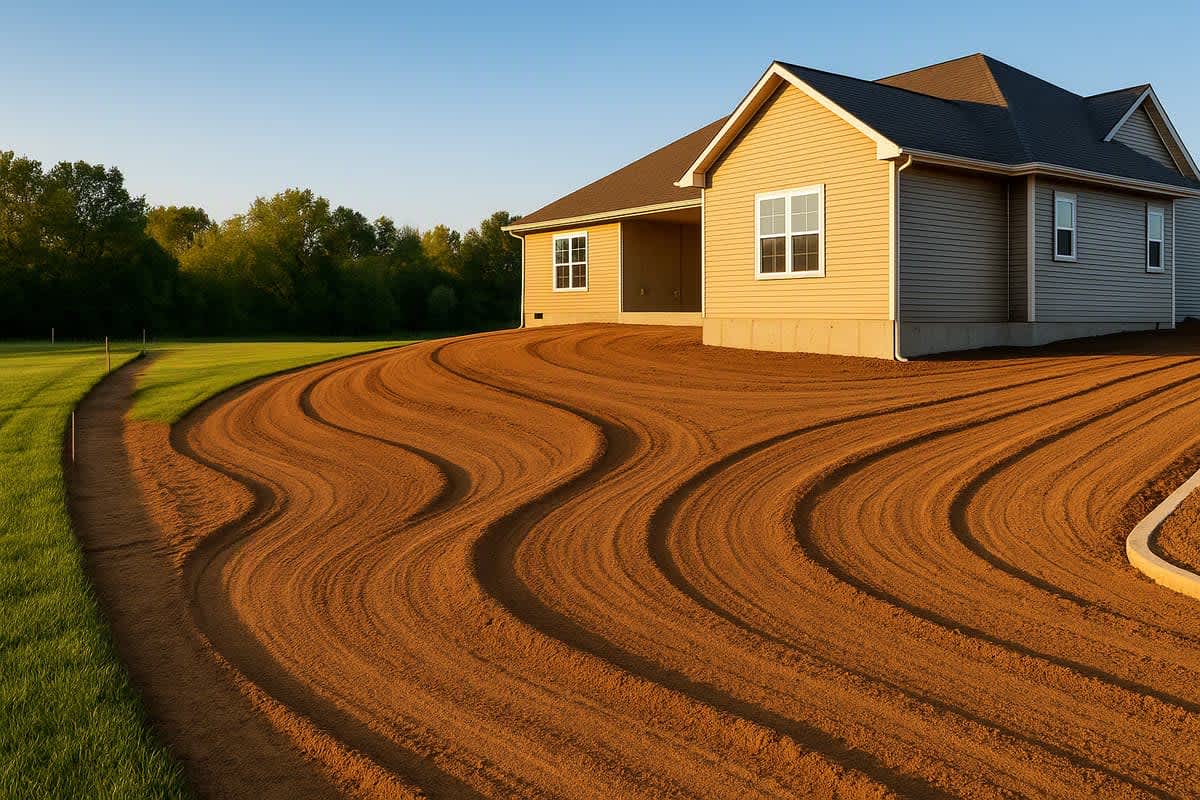
How much does excavation and grading cost?
How much does excavation and grading cost?
$1,100 – $5,600 typical residential project
$2.50 – $15.00 per cubic yard
$110 – $325 per hour

Average excavation and grading costs
Excavation and grading typically cost $1,100 to $5,600 for most residential projects, with per-cubic-yard rates of $2.50 to $15.00 and hourly rates of $110 to $325. The total you pay depends on your project scope, soil conditions, equipment needed, and regional labor market. Grading alone runs $500 to $5,000 depending on lot size and terrain complexity.
| Cost metric | Average range |
|---|---|
| Per cubic yard | $2.50 – $15.00 |
| Per hour (equipment + operator) | $110 – $325 |
| Typical residential project total | $1,100 – $5,600 |
| Per cubic yard (Homewyse national estimate) | $108 – $247 |
| Grading (small yard) | $500 – $1,000 |
| Grading (full home lot) | $1,000 – $5,000 |
These costs cover standard residential work under favorable conditions. Projects involving rock removal, steep slopes, restricted site access, or hauling debris off-site will push costs toward the higher end or well beyond these averages.
Excavation cost per hour
Most excavation contractors charge $110 to $325 per hour nationally, which includes a qualified operator and the equipment. Hourly pricing is most common for utility trenching, exploratory digs, and projects where the scope may change during the work.
| Cost tier | Hourly rate | Common applications |
|---|---|---|
| Light residential | $110 – $150 | Mini excavators, shallow trenching, landscaping |
| Standard excavation | $160 – $260 | Foundations, utilities, site prep |
| Heavy / commercial | $275 – $400 | Large excavators, deep excavation |
| Specialty / difficult conditions | $400+ | Rock, caliche, urban congestion |
Hourly rates provide greater cost transparency when productivity is affected by access constraints, soil variability, or coordination with other trades. However, many contractors prefer quoting per cubic yard or as a flat project rate, especially for well-defined scopes of work.
A small backyard job may cost as little as $100 per hour, while large commercial excavation with multiple machines can exceed $500 per hour.
Excavation cost by project type
Your total excavation cost depends heavily on what you are digging for. A simple driveway excavation is far less expensive than digging a full basement or removing rock ledge. Below is a breakdown of typical project costs.
| Project type | Equipment used | Avg. hourly rate | Typical total cost |
|---|---|---|---|
| New home foundation | Standard excavator, backhoe | $160 – $260 | $1,500 – $10,000 |
| Basement excavation | Large excavator + trucks | $220 – $350 | $1,500 – $10,000 |
| Dig around existing house | Standard excavator | $160 – $260 | $5,000 – $15,000 |
| In-ground swimming pool | Mini to standard excavator | $130 – $240 | $1,000 – $5,500 |
| Driveway or patio | Skid steer, mini excavator | $110 – $190 | $1,000 – $3,000 |
| Hillside / slope flattening | Dozer, large excavator | $170 – $325 | $1,000 – $5,000 |
| Utility trenching | Backhoe, trencher | $130 – $220 | $600 – $3,500 |
| Land grading / leveling | Dozer, grader | $170 – $325 | $1,500 – $8,000 |
| Rock / ledge removal | Large excavator, breaker | $275 – $400+ | $1,000 – $20,000 |
| Commercial site prep | Multiple machines | $225 – $450+ | $12,000 – $90,000+ |
Foundation excavation
Excavating for a new home foundation costs $1,500 to $10,000, with most jobs taking 8 to 24 hours of equipment time. The price varies based on the foundation footprint, depth requirements, and whether the soil is easily workable or rocky.
Basement excavation
Basement projects typically run $1,500 to $10,000 for residential work, though complex digs can reach $18,000. These jobs require larger equipment and hauling trucks to remove significant volumes of earth.
Pool excavation
Digging for an in-ground swimming pool costs $1,000 to $5,500. Pool excavation generally takes 4 to 12 hours and uses a mini to standard excavator. Rocky soil or limited backyard access will increase costs substantially.
Digging around an existing house
Excavating around an existing structure is one of the more expensive residential projects at $5,000 to $15,000. The higher cost reflects the need for careful operation near existing foundations, utilities, and landscaping.
Grading costs
Grading adjusts the slope and soil elevation of a construction site to create a level surface for building, drainage, or lawn installation. It costs $500 to $1,000 for a small yard and $1,000 to $5,000 for a full home lot or average backyard.
| Grading project | Average cost |
|---|---|
| Small yard grading | $500 – $1,000 |
| Full home lot or backyard | $1,000 – $5,000 |
| Lawn installation grading | $1,000 – $5,000 |
| Hillside / slope flattening | $1,000 – $5,000 |
| Land grading and leveling (hourly) | $170 – $325 per hour |
Grading is typically performed before excavation begins and uses heavy equipment like bulldozers and motor graders. A certified civil engineer usually prepares a comprehensive grading plan, and most municipalities require permits and a detailed plan before work can start.
Most local jurisdictions require homeowners to obtain permits and submit a detailed grading plan before any grading work begins. Areas with unique environmental considerations like seismic activity zones or wetlands may have additional requirements that affect both cost and timeline. Check with your local building department before hiring a contractor.
What affects grading costs
Several site-specific factors influence what you will pay for grading:
- Slope severity: Lots with a 20% to 30% grade require significantly more earthwork than relatively flat sites.
- Drainage requirements: Proper water management may require additional regrading or installing drainage features.
- Neighboring properties: Retaining walls or other shoring may be needed to protect adjacent lots.
- Underground utilities: Existing utility lines must be located and protected, which slows work and adds cost.
- Environmental considerations: Wetlands, erosion controls, and stormwater regulations can increase both time and expense.
Cut and fill
Cut-and-fill is a grading method that aims to balance the volume of soil removed (cut) with the volume needed to fill low areas. When cut and fill are balanced, you avoid the cost of hauling excess material off-site or importing additional fill. A well-executed cut-and-fill plan can save thousands of dollars on a sloped lot.
Excavation equipment hourly rates
The type and size of equipment needed for your project is one of the biggest cost drivers. Larger machines handle more volume per hour but cost significantly more to operate.
| Equipment type | National average hourly rate | Typical applications |
|---|---|---|
| Mini excavator | $110 – $155 | Trenching, residential work, tight spaces |
| Standard excavator | $160 – $260 | Foundations, site work |
| Large excavator | $220 – $375 | Commercial projects, deep digs |
| Backhoe | $110 – $210 | Utilities, backfill |
| Bulldozer | $160 – $325 | Grading, land clearing |
| Skid steer | $85 – $155 | Confined spaces, light grading |
Equipment costs include the machine itself plus fuel, maintenance, insurance, and transportation to the job site. Rental rates for equipment without an operator are lower, but most homeowners and general contractors hire a contractor who provides both the machine and a licensed operator.
Excavation labor costs
Operator wages are a major component of excavation pricing. Experienced operators command higher hourly wages but often reduce total project costs by working more efficiently and avoiding costly mistakes like utility strikes.
| Role | National hourly wage |
|---|---|
| Excavator operator (entry-level) | $21 – $28 |
| Excavator operator (experienced) | $28 – $38 |
| Backhoe operator | $23 – $32 |
| Dozer operator | $24 – $34 |
| Heavy equipment operator | $22 – $36 |
| Excavation laborer | $19 – $26 |
These are base wages. The hourly rate you pay a contractor includes markup for overhead, insurance, profit, equipment costs, and crew support. That is why contractor rates of $110 to $325 per hour are significantly higher than the operator wage alone.
Paying a premium for a skilled, experienced operator often results in a lower total project cost. Senior operators work faster, avoid rework, and are less likely to damage underground utilities. All of these benefits reduce expensive delays and repairs.
Factors that affect excavation costs
No two excavation projects are the same. Several variables can push your costs well above or below average estimates.
| Factor | Impact on cost |
|---|---|
| Soil type | Clay, rocky, or muddy soil increases difficulty and cost |
| Site accessibility | Restricted access requires smaller equipment and more time |
| Depth of excavation | Deeper digs require larger equipment and more safety measures |
| Rocks or obstacles | Rock removal can add $1,000 to $20,000 |
| Debris disposal | Hauling away soil versus piling it on-site adds trucking costs |
| Terrain slope | Steep grades require more grading and potential retaining walls |
| Season and timing | Off-season work (early spring, late fall) may yield lower rates |
| Permits and inspections | Permit fees vary by municipality |
| Geographic location | Urban and high-demand areas cost 15% to 45% more |
Soil type and conditions
Soil composition is one of the most significant cost factors. Soft, loamy soil is easy to excavate and keeps costs low. Hard clay, rocky ground, or muddy conditions slow production and increase equipment wear, driving up your total bill.
Rocky sites may require hydraulic breakers or blasting, which can add $1,000 to $20,000 depending on the volume of rock. Expansive clay soils (common in Texas and the South) require special handling and can push hourly rates 15% to 30% above national averages.
Site accessibility
Difficult site access forces contractors to use smaller, less productive machines and sometimes requires manual labor for portions of the work. If heavy equipment cannot easily reach the excavation area, expect longer timelines and higher costs.
Debris disposal and hauling
Piling excavated material on-site is significantly cheaper than hauling it away. When soil must be trucked off-site, you pay for the truck, driver, fuel, and disposal fees. Contaminated soil or material containing debris may require special disposal at additional cost.
Seasonal pricing
Excavation costs tend to be lower during the off-season. Contractors are more likely to offer competitive rates in early spring or late fall when demand is slower. However, confirm that weather and soil conditions are suitable for your project before scheduling off-season work. Frozen ground or excessive rain can negate any savings.
Regional cost comparison
Excavation pricing varies significantly across the country. Labor markets, soil conditions, regulations, and construction demand all contribute to regional price differences.
| Region | Typical hourly rate | vs. national average | Key cost factors |
|---|---|---|---|
| National average | $110 – $325 | Baseline | Mixed conditions |
| Texas | $180 – $425 | +15% to 30% | Clay, caliche, high demand |
| California | $220 – $475 | +30% to 45% | Labor costs, strict regulations |
| Southeast U.S. | $100 – $275 | -5% to -10% | Lower labor costs, softer soils |
| Northeast U.S. | $150 – $350 | +10% to 20% | Rocky terrain, seasonal constraints |
| Midwest | $110 – $280 | Near baseline | Variable soil, moderate demand |
Texas runs higher than average due to expansive clay, caliche layers, strong year-round construction demand, and reduced contractor idle capacity. California's premium reflects high labor costs, extensive environmental regulations, and permitting requirements.
Urban areas within any region tend to cost more than rural locations because of traffic, access constraints, noise ordinances, and higher labor rates.
How to calculate excavation costs
You can estimate your excavation costs by calculating the volume of soil to be removed and multiplying by a per-cubic-yard rate. Here is the basic formula:
- Measure the excavation area: Determine the length, width, and depth in feet.
- Calculate cubic feet: Length × Width × Depth = cubic feet.
- Convert to cubic yards: Divide cubic feet by 27 (since 1 cubic yard = 27 cubic feet).
- Multiply by cost per cubic yard: Use a rate of $2.50 to $15.00 per cubic yard for basic excavation, or $108 to $247 per cubic yard for full-service estimates including labor, equipment, and disposal.
Example: A foundation excavation measuring 40 feet × 30 feet × 4 feet deep equals 4,800 cubic feet, or about 178 cubic yards. At $5 to $10 per cubic yard for basic excavation, that is $890 to $1,780 in direct excavation costs. Factor in equipment mobilization, operator time, and hauling, and the full project cost may reach $3,000 to $6,000.
Online calculators and general estimates are useful for budgeting, but they are not a substitute for professional quotes. Contact at least three licensed excavation contractors for itemized bids based on an in-person site assessment. Soil conditions, access, and hidden obstacles can dramatically change the actual cost.
What is included in excavation costs
A comprehensive excavation quote should include:
- Site staking and layout of the excavation area
- Dig-safe utility verification
- Equipment mobilization and transportation
- Operator and crew labor
- Soil and rock removal to specified depth
- Site protection and cleanup
- Debris disposal (if hauling away)
Items that are typically not included and may cost extra: permits and inspections, hazardous material testing and remediation, utility relocation, retaining walls, backfill material, compaction, and general contractor overhead (which adds 13% to 22% to the total).
Frequently asked questions
How much does excavation cost per cubic yard?
Basic excavation costs $2.50 to $15.00 per cubic yard for soil removal alone. Full-service excavation, including labor, equipment, and disposal, averages $108 to $247 per cubic yard nationally.
How much does grading a yard cost?
Grading a small yard costs $500 to $1,000. A full home lot or average backyard costs $1,000 to $5,000 to grade. Steep slopes, poor soil conditions, and drainage requirements push costs toward the higher end.
What is the average hourly rate for excavation?
Excavation contractors charge $110 to $325 per hour for standard residential and commercial work. Light residential work starts around $110 per hour, while specialty or difficult-condition excavation can exceed $400 per hour.
What is the difference between excavation and grading?
Excavation is the process of digging and removing soil to create trenches, foundations, or cavities. Grading is the process of leveling and shaping the ground surface to create proper slope and drainage. Grading is typically performed before or after excavation as part of site preparation.
How much does it cost to level a sloped lot?
Leveling a sloped lot costs $1,000 to $5,000 for moderate grades. Lots with a 20% to 30% grade, heavy vegetation, and large acreage can cost $10,000 to $50,000+ due to the volume of earthwork, tree removal, and potential retaining wall construction.
How can I reduce excavation costs?
You can lower costs by scheduling work during the off-season, ensuring clear site access for large equipment, keeping excavated soil on-site instead of hauling it away, and getting multiple competitive bids. Choosing a lot with favorable soil conditions and minimal slope also saves significantly on site preparation.
Do I need a permit for excavation or grading?
Most municipalities require permits for significant excavation and grading work. Permit requirements vary by location, but any project that alters drainage patterns, affects neighboring properties, or prepares a building foundation will likely need a permit and possibly an engineered grading plan.