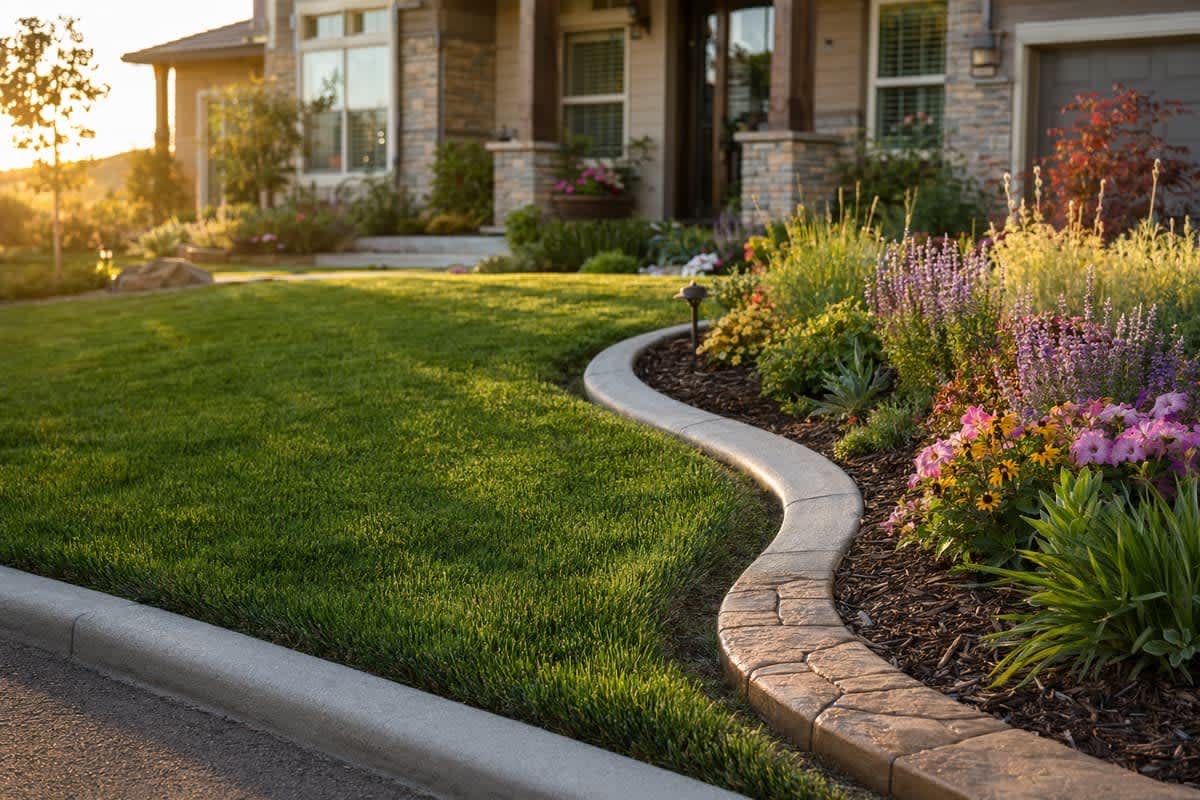
How much does landscape curbing cost?
How much does landscape curbing cost?
$5 – $20 per linear foot
$1,000 – $3,000 average total cost
$1,500 national average

Average landscape curbing cost
Landscape curbing, also called concrete or cement edging, costs most homeowners $1,000 to $3,000 for a typical residential project. The national average is about $1,500 for professionally installed concrete curbing around garden beds, driveways, and walkways. Pricing depends heavily on linear footage, curbing style, and your geographic location.
On a per-linear-foot basis, expect to pay $5 to $20 per linear foot installed. Smaller projects under 100 linear feet often carry higher per-foot rates due to minimum charges, while larger jobs of 300 or more linear feet can bring the cost down significantly.
| Project Size | Average Total Cost |
|---|---|
| Small (50 – 100 linear feet) | $500 – $1,500 |
| Medium (100 – 200 linear feet) | $1,000 – $3,000 |
| Large (200 – 400 linear feet) | $2,000 – $6,000 |
| National average | $1,500 |
Cost per linear foot by style
The curbing profile you choose has a direct impact on price. Simple, straight-edged profiles are the most affordable, while decorative stamped or colored curbing costs more due to additional labor, materials, and finishing techniques.
| Curbing Style | Cost per Linear Foot (Installed) |
|---|---|
| Standard extruded (slant or mower style) | $5 – $10 |
| Flat ribbon or square | $6 – $12 |
| Stamped or textured | $8 – $15 |
| Colored or stained | $10 – $18 |
| Decorative stamped and colored | $12 – $20 |
| Custom or hand-formed | $15 – $25 |
The "mower edge" or slant profile is the most popular residential option because it allows a mower wheel to ride along the top, eliminating the need for string trimming. Stamped patterns that mimic brick, cobblestone, or flagstone add curb appeal but come at a premium.
Types of landscape curbing
Landscape curbing falls into two main categories: machine-extruded concrete curbing and pre-formed edging materials. Machine-extruded curbing is the most common professional method and produces a continuous, seamless border. Pre-formed options include individual pavers, bricks, and manufactured stone edging. Below is a comparison of the most popular curbing types.
| Curbing Type | Cost per Linear Foot | Best For |
|---|---|---|
| Extruded concrete curbing | $5 – $15 | Flower beds, driveways, walkways |
| Poured-in-place concrete | $7 – $18 | Custom shapes, large projects |
| Brick edging | $5 – $15 | Traditional or cottage-style landscapes |
| Natural stone edging | $8 – $25 | Upscale, organic-looking borders |
| Concrete paver edging | $5 – $12 | Matching existing hardscape |
| Precast concrete curbing | $4 – $10 | Straight-line applications |
Extruded concrete curbing
Extruded curbing is formed on-site using a specialized curbing machine that shapes wet concrete into a continuous border as it moves along the ground. This method creates seamless curves and straight lines without joints, reducing the chance of shifting or weed growth between segments.
Most residential curbing projects use this method, and it typically costs $5 to $15 per linear foot depending on the profile and finish. The concrete cures within 24 to 48 hours, and the curbing can last 20 to 30 years or more with proper maintenance.
Poured-in-place concrete
Poured-in-place curbing involves building forms along the desired edge, then filling them with concrete. This method allows for wider, taller, or uniquely shaped curbing that an extruder cannot produce. It costs $7 to $18 per linear foot and is ideal for large commercial properties or custom residential designs.
Brick and stone edging
Brick edging costs $5 to $15 per linear foot installed and offers a classic, timeless look. Natural stone edging is the premium option at $8 to $25 per linear foot, using materials like bluestone, limestone, or granite to create organic-looking borders that blend with natural landscapes.
Material costs breakdown
Understanding the material component of curbing costs helps when budgeting or comparing quotes. Materials typically account for 30% to 40% of the total installed price, with labor making up the remainder.
| Material | Material Cost per Linear Foot |
|---|---|
| Standard concrete mix | $1.50 – $3.00 |
| Colored concrete mix | $2.50 – $5.00 |
| Stamping tools and release agent | $0.50 – $2.00 |
| Concrete sealer | $0.25 – $1.00 |
| Rebar or fiber reinforcement | $0.50 – $1.50 |
| Brick pavers (per unit) | $0.50 – $2.00 |
| Natural stone | $3.00 – $12.00 |
Labor rates for curbing installation run $3 to $10 per linear foot, or $40 to $80 per hour, depending on your region and the complexity of the work. Most curbing contractors charge per linear foot rather than hourly.
| Labor Pricing Method | Typical Rate |
|---|---|
| Per linear foot | $3 – $10 |
| Per hour | $40 – $80 |
Many curbing contractors require a minimum order of 100 to 150 linear feet or charge a minimum project fee of $500 to $1,000. If you have a smaller project, consider bundling multiple garden beds or borders to meet the minimum and lower your per-foot cost.
Factors that affect curbing cost
Several variables determine where your project falls within the price ranges listed above. Getting accurate quotes means understanding how each factor influences the final bill.
| Cost Factor | Impact on Price |
|---|---|
| Linear footage | More footage = lower per-foot cost |
| Curbing profile and height | Taller or wider profiles cost more |
| Color and stamps | Adds $2 – $8 per linear foot |
| Site preparation | Adds $1 – $3 per linear foot |
| Curves vs. straight lines | Complex curves increase labor time |
| Accessibility | Hard-to-reach areas add cost |
| Soil and terrain conditions | Rocky or sloped ground costs more |
| Geographic location | Urban areas typically 15% – 30% higher |
| Sealing and finishing | Adds $0.50 – $2.00 per linear foot |
| Old curbing removal | Adds $2 – $5 per linear foot |
Linear footage
Total linear footage is the single biggest cost factor. Most contractors offer volume discounts starting around 200 linear feet. A project with 50 linear feet might cost $12 to $15 per linear foot, while a 400-linear-foot project could drop to $5 to $8 per linear foot.
Color and decorative finishes
Adding integral color to the concrete mix increases material costs by $1 to $3 per linear foot. Stamped patterns that replicate brick, cobblestone, or slate add another $2 to $5 per linear foot for the additional tooling and labor required. Combining color with stamping is the most expensive decorative option.
Site preparation and removal
If the installation area requires grading, sod removal, or clearing of existing edging materials, expect to add $1 to $5 per linear foot to the total cost. Removing old concrete curbing is particularly labor-intensive and can cost $2 to $5 per linear foot, including disposal fees.
Terrain and accessibility
Sloped yards, rocky soil, and tight spaces between structures all increase installation difficulty. Curbing machines need relatively flat, accessible ground to operate efficiently. Steep slopes may require hand-forming or additional concrete to build up the curb, adding 10% to 25% to the project cost.
Geographic location
Labor and material costs vary significantly by region. Homeowners in major metropolitan areas like New York, San Francisco, or Los Angeles can expect to pay 15% to 30% more than the national average. Rural areas and regions with lower costs of living tend to fall on the lower end of the price spectrum.
DIY vs. professional installation
DIY landscape curbing is possible but comes with significant trade-offs. Renting a curbing machine costs $200 to $500 per day, and using one effectively requires practice. Most homeowners find that professional installation delivers a cleaner, more durable result.
| Approach | Estimated Cost (200 Linear Feet) | Pros | Cons |
|---|---|---|---|
| DIY curbing machine rental | $600 – $1,200 | Lower cost | Steep learning curve, inconsistent results |
| DIY hand-formed concrete | $400 – $900 | No machine needed | Very labor-intensive, slower |
| DIY plastic/metal edging | $100 – $400 | Easy to install | Less durable, less attractive |
| Professional installation | $1,200 – $3,000 | Expert finish, warranty | Higher cost |
DIY considerations
If you choose the DIY route, hand-formed concrete edging is the most accessible option for beginners. You will need concrete mix, a garden hose for shaping, basic forms, and finishing tools. Plan for a full weekend of work for 100 linear feet.
Curbing machine rentals are available at some equipment rental stores, but availability is limited. The machines require two people to operate and produce the best results on flat, well-prepared ground. Practice on a hidden section of your yard before tackling visible areas.
Hire a pro if your project involves curves, slopes, colored or stamped concrete, or exceeds 100 linear feet. Poor DIY curbing can crack, crumble, or look uneven, and fixing mistakes often costs more than hiring a contractor from the start.
Maintenance and repair costs
Concrete landscape curbing is low-maintenance but not maintenance-free. Regular care extends the lifespan of your curbing and keeps it looking sharp for decades.
| Maintenance Task | Cost | Frequency |
|---|---|---|
| Sealing | $0.50 – $2.00 per linear foot | Every 2 – 3 years |
| Crack repair | $3 – $8 per linear foot | As needed |
| Section replacement | $5 – $15 per linear foot | As needed |
| Pressure washing | $0.25 – $0.75 per linear foot | Annually |
| Re-coloring or staining | $2 – $6 per linear foot | Every 5 – 10 years |
Sealing your curbing
Applying a concrete sealer every two to three years protects against moisture penetration, freeze-thaw damage, UV fading, and staining. A quality acrylic or polyurethane sealer costs $0.50 to $2.00 per linear foot if applied professionally, or $20 to $50 for a gallon of sealer if you do it yourself.
Common repairs
Hairline cracks are normal and can be filled with concrete caulk for under $10 per tube. Larger cracks or sections damaged by tree roots, vehicle impact, or ground settling may need to be cut out and replaced, costing $5 to $15 per linear foot for professional repair.
To prevent cracking, avoid driving vehicles over curbing, keep sprinklers from hitting the curbing directly during winter, and address tree root issues before they push against the concrete.
Frequently asked questions
Is landscape curbing worth the investment?
Yes, for most homeowners. Concrete landscape curbing provides a permanent, clean border that reduces lawn maintenance time, prevents grass and weeds from invading garden beds, and improves curb appeal. It can increase property value by enhancing the overall appearance of your landscaping and typically lasts 20 to 30 years with minimal upkeep.
How long does concrete curbing last?
Properly installed and maintained concrete curbing lasts 20 to 30 years or longer. Factors like climate, soil movement, and whether the curbing is sealed regularly affect its longevity. In freeze-thaw climates, sealing is especially important to prevent moisture from cracking the concrete.
How long does installation take?
A professional crew can install 200 to 500 linear feet of extruded concrete curbing in a single day. Smaller projects of 50 to 100 linear feet often take just a few hours. Stamped and colored curbing takes longer due to additional finishing steps. The concrete needs 24 to 48 hours to cure before it can handle foot traffic.
What is the best time of year to install curbing?
Spring and fall are ideal for concrete curbing installation. Temperatures between 50°F and 85°F allow the concrete to cure properly. Avoid installation during extreme heat, which can cause the concrete to dry too quickly and crack, or during freezing temperatures, which prevent proper curing.
What are cheaper alternatives to concrete curbing?
Budget-friendly alternatives include plastic landscape edging ($0.50 to $2.00 per linear foot), steel edging ($2 to $5 per linear foot), and recycled rubber edging ($1 to $4 per linear foot). These options are easier to install yourself but lack the durability, permanence, and polished appearance of concrete curbing. Some homeowners also opt for river rock borders as a decorative alternative.
| Alternative Material | Cost per Linear Foot |
|---|---|
| Plastic landscape edging | $0.50 – $2.00 |
| Steel edging | $2 – $5 |
| Recycled rubber edging | $1 – $4 |
How many quotes should I get?
Get at least three quotes from licensed curbing contractors. Ask each contractor about their concrete mix, reinforcement methods, warranty coverage, and whether sealing is included in the price. Compare quotes on a per-linear-foot basis to ensure you are evaluating apples to apples.