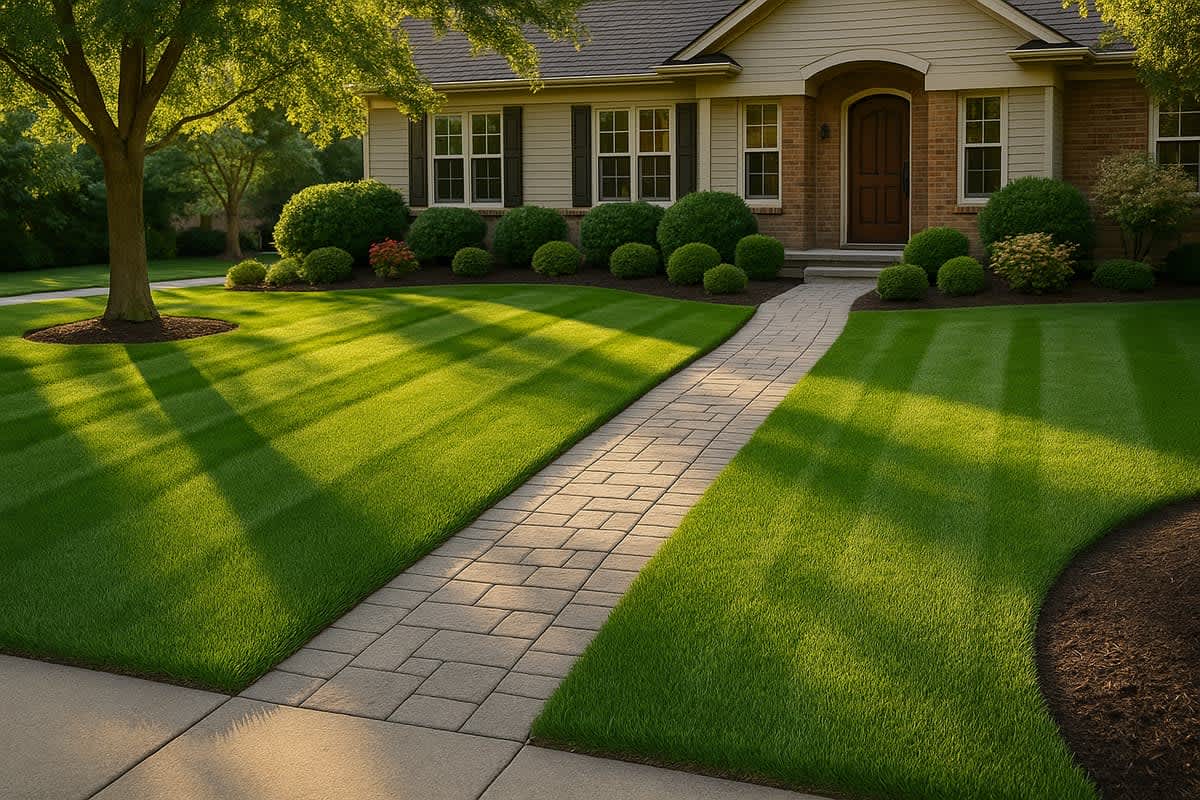
How much does lawn care cost?
How much does lawn care cost?
$50 – $250 per visit
$100 – $400 per month
$40 – $80 per mow (1/4 acre)

Average lawn care prices
Most homeowners pay $50 to $250 per visit for professional lawn care, with the national average landing around $130 per service. Monthly lawn care plans typically cost $100 to $400, depending on yard size, services included, and your location. A simple mow-and-trim job on a quarter-acre lot runs $40 to $80, while comprehensive packages that bundle mowing, fertilization, weed control, and seasonal cleanups push costs higher.
| Service type | Average cost per visit |
|---|---|
| Basic mowing (1/4 acre) | $40 - $80 |
| Full-service visit | $50 - $250 |
| Monthly lawn care plan | $100 - $400 |
| Annual lawn care program | $1,200 - $4,800 |
| Hourly rate (labor only) | $40 - $80 per hour |
Understanding what drives these numbers helps you budget accurately, whether you're hiring a solo operator with a truck-mounted mower or a full-service landscaping company. Below, you'll find detailed pricing for every common lawn care service, the factors that influence your bill, and tips for getting the best value.
Lawn mowing prices
Lawn mowing is the most frequently purchased lawn care service, and pricing is straightforward. Expect to pay $40 to $80 per hour for a professional crew, which typically includes mowing, string trimming along edges, and blowing off hard surfaces. Most companies quote a flat rate per visit based on lot size rather than billing by the hour.
| Lawn size | Cost per mow |
|---|---|
| 1/4 acre (small yard) | $40 - $80 |
| 1/2 acre (medium yard) | $80 - $160 |
| 1 acre (large yard) | $160 - $320 |
| 2+ acres | $300 - $600 |
Prices skew toward the higher end in urban and suburban markets with a high cost of living. Rural areas and smaller towns tend to fall near the low end. Weekly mowing during the growing season is standard, and many providers offer a discount of 10% to 15% for recurring schedules versus one-time service calls.
Obstacles like steep slopes, fenced areas requiring push-mowing, or heavily landscaped beds with lots of trimming edges add time and cost. If your yard has these features, expect quotes to come in above the ranges listed.
Lawn care prices by service
Beyond mowing, professional lawn care covers a wide range of services, from fertilization and aeration to pest control and overseeding. Each service has its own pricing structure based on labor time, materials, and equipment needs. Here is a detailed breakdown.
| Service | Cost per 1/4 acre | Cost per 1/2 acre | Cost per acre |
|---|---|---|---|
| Mowing (with trim and blow) | $40 - $80 | $80 - $160 | $160 - $320 |
| Aeration | $120 - $240 | $240 - $480 | $480 - $960 |
| Weed control | $40 - $80 | $80 - $160 | $160 - $320 |
| Fertilizing | $65 - $85 | $130 - $170 | $260 - $340 |
| Overseeding | $165 - $330 | $330 - $660 | $660 - $1,320 |
| Seeding (new lawn) | $265 - $530 | $530 - $1,060 | $1,060 - $2,120 |
| Dethatching | $60 - $120 | $120 - $240 | $240 - $480 |
| Leaf removal | $60 - $120 | $120 - $240 | $240 - $480 |
| Pest control | $40 - $120 | $160 - $240 | $320 - $480 |
| Watering | $40 - $80 | $80 - $160 | $160 - $320 |
| Yard cleanup | $40 - $80 | $80 - $160 | $160 - $320 |
Aeration
Core aeration pulls small plugs of soil from your lawn to relieve compaction and improve water and nutrient absorption. The average cost to aerate a quarter-acre lawn is around $139, though prices range from $120 to $240 depending on your region. Most lawns benefit from annual aeration in the fall.
The price includes equipment use, which is a significant factor. Professional powered aerators cost $3,000 to $5,000+ to purchase, so the service price reflects that investment. Expect the crew to spend about three hours on a quarter-acre lot.
Fertilizing
Fertilizing costs $65 to $85 for a quarter-acre lawn. The job itself takes roughly 30 minutes with a broadcast spreader, but materials drive a significant portion of the bill. A bag of quality fertilizer runs about $60, and you'll use roughly three-quarters of a bag on a quarter acre.
Most lawn care programs include four to six fertilizer applications per year, spaced six to eight weeks apart during the growing season. Annual fertilization costs total $260 to $510 for a quarter-acre property.
Weed control
Broadcast weed control applications cost $40 to $80 per quarter acre. Chemical costs are minimal since products like Tenacity or Trimec are mixed in small amounts with water to cover large areas. The service price is primarily labor.
Pre-emergent applications in early spring and post-emergent spot treatments through the growing season are the most effective approach. Many providers bundle weed control with fertilization into a single visit to reduce costs.
Pest control
Treating grubs, ants, mosquitoes, or other lawn pests costs $40 to $120 for a quarter-acre lot. The price varies because the technician may need to assess the type of pest and select the appropriate treatment chemicals. Grub treatments tend to be on the higher end since they require specific products applied at precise timing.
Leaf removal
Fall leaf cleanup runs $60 to $120 per quarter acre. Methods include raking and bagging, mowing and mulching in place, or blowing into piles for collection. The approach and the volume of leaves determine whether the job takes one hour or three.
Overseeding
Overseeding fills in thin or bare spots and costs $165 to $330 for a quarter-acre lawn. The price includes grass seed, which can be expensive depending on the variety. Cool-season grasses like tall fescue or Kentucky bluegrass are typically overseeded in early fall for best germination.
Dethatching
Dethatching removes the layer of dead grass and organic debris that builds up between the soil surface and the living grass blades. This service costs $60 to $120 per quarter acre and is often performed alongside aeration for maximum benefit.
Small-area and specialty service prices
Some lawn and yard services are priced by the square foot or per unit rather than by the acre. These include mulching, hedge trimming, tree work, and garden bed installations. Here is what to expect for common small-area services based on a 100-square-foot area.
| Service | Average cost |
|---|---|
| Mulching (100 sq ft) | $90 |
| Hedge trimming (100 sq ft) | $40 |
| Tree pruning (simple) | $60 |
| Flower bed installation (100 sq ft) | $440 |
| Flower planting (100 sq ft) | $213 |
| Gutter cleaning | $40 |
| Sod installation (100 sq ft) | $240 |
| Tree planting | $60 - $90 per tree |
| Tree transplanting | $40 - $80 per tree |
Flower bed installation is the most expensive small-area service because it involves soil preparation, edging, plant material, and significant labor. Mulching is more affordable but adds up quickly on larger properties with multiple beds.
Tree planting costs $60 to $90 per tree, which covers the labor to dig the hole, amend the soil, and plant. The cost of the tree itself is separate unless your provider includes it in a bundled quote. For larger trees that need to come down, tree removal is a separate service with its own pricing structure.
Monthly and seasonal lawn care costs
Signing up for a monthly or seasonal plan is the most common way homeowners pay for lawn care. Monthly plans cost $100 to $400, depending on the services included and the size of the property. Annual programs run $1,200 to $4,800.
| Plan type | Typical cost | Services usually included |
|---|---|---|
| Mowing only (weekly) | $160 - $320 per month | Mowing, trimming, blowing |
| Basic lawn care plan | $100 - $200 per month | Mowing, edging, seasonal fertilization |
| Full-service plan | $200 - $400 per month | Mowing, fertilization, weed/pest control, aeration, cleanup |
| Premium/estate plan | $400+ per month | All services plus irrigation, landscape maintenance |
Monthly plans spread costs evenly across the year, even though service frequency varies by season. You might receive four to five mowing visits per month in summer but only one or two maintenance visits during winter months. The annual total is divided into equal monthly payments.
Many lawn care companies offer 10% to 20% discounts for annual contracts paid upfront or for bundling multiple services together. Ask about package pricing before committing to individual per-visit rates.
Factors that affect lawn care prices
Your actual lawn care costs depend on several variables. Understanding these factors helps you anticipate your quote and negotiate effectively.
| Factor | Impact on price |
|---|---|
| Lawn size | Largest cost driver; prices scale with acreage |
| Geographic location | Urban and high cost-of-living areas pay 30% to 50% more |
| Lawn condition | Overgrown or neglected lawns cost more for initial visits |
| Terrain and obstacles | Slopes, fences, and tight spaces increase labor time |
| Service frequency | Weekly service costs less per visit than bi-weekly or one-time |
| Grass type | Specialty grasses (Bermuda, Zoysia) may require specific care |
| Season | Peak growing season (spring/summer) has higher demand and pricing |
Lawn size
Lot size is the single biggest factor in lawn care pricing. A quarter-acre lot takes roughly one hour to mow, while a full acre takes three to four hours. Larger properties cost more in total, but the per-acre rate often decreases because the crew is already on-site with equipment running.
Geographic location
Lawn care rates vary significantly by region. A service that costs $40 in a rural Midwestern town might cost $80 or more in a major metro area like New York, San Francisco, or Seattle. Labor costs, fuel prices, and local competition all contribute to regional differences.
Lawn condition and terrain
A well-maintained lawn on flat ground is the easiest and cheapest to service. Overgrown grass, heavy weed infestations, steep hills, lots of trees, or tight spaces between structures all increase the time required. First-time service calls on neglected properties may cost 50% to 100% more than the ongoing rate.
Service frequency
Weekly mowing contracts command the lowest per-visit price because the provider can plan efficient routes and the grass stays manageable between visits. Bi-weekly mowing costs more per visit since the grass grows taller and takes longer to cut. One-time or on-demand service calls carry the highest per-visit rates.
DIY vs. professional lawn care costs
Doing your own lawn care costs significantly less in dollar terms, but the time investment is substantial. Here is how the two approaches compare for a quarter-acre lot over a full year.
| Expense | DIY cost (annual) | Professional cost (annual) |
|---|---|---|
| Mowing (weekly, 30 weeks) | $0 - $200 (gas and maintenance) | $1,200 - $2,400 |
| Equipment purchase (amortized) | $200 - $500 | $0 |
| Fertilizer (4 applications) | $100 - $200 | $260 - $340 |
| Weed control | $30 - $60 | $160 - $320 |
| Aeration (1 time) | $80 - $100 (rental) | $120 - $240 |
| Total estimated annual cost | $410 - $1,060 | $1,740 - $3,300 |
DIY lawn care saves $1,000 to $2,500 per year on a typical quarter-acre lot. However, you'll spend roughly 150 to 200 hours annually on mowing, edging, fertilizing, and other tasks. At the average professional rate of $40 to $80 per hour, the labor value of your time often offsets the savings.
Equipment is the largest upfront cost for DIY. A quality push mower costs $300 to $500, a string trimmer runs $100 to $250, and a blower adds another $100 to $200. These tools last several years but require ongoing maintenance and fuel.
A hybrid approach works well for many homeowners: handle weekly mowing yourself and hire professionals for specialized services like aeration, fertilization, and pest control. This combination delivers the best balance of cost savings and lawn health.
How to save money on lawn care
There are several proven strategies to reduce your lawn care costs without sacrificing quality.
- Sign a seasonal or annual contract. Recurring service agreements typically cost 10% to 20% less than per-visit pricing.
- Bundle services. Companies charge less when they combine mowing with fertilization, weed control, or other treatments in a single visit.
- Choose weekly mowing. It sounds counterintuitive, but weekly service is cheaper per visit than bi-weekly because the grass is easier to cut.
- Get multiple quotes. Prices vary widely between providers. Three to five quotes give you a clear picture of the local market.
- Simplify your landscape. Fewer garden beds, trees, and obstacles mean less trimming time and lower bills.
- Handle leaf removal yourself. Fall cleanup is labor-intensive but requires no special skills or equipment beyond a rake or blower.
- Water and mow correctly. Proper watering depth, mowing height, and frequency reduce the need for expensive corrective treatments like overseeding or heavy fertilization.
- Consider artificial grass. While the upfront cost is higher, synthetic turf eliminates ongoing mowing, fertilization, and watering expenses entirely.
How to hire a lawn care service
Finding the right lawn care provider starts with understanding what you need and vetting candidates carefully.
- Define your needs. Decide whether you want mowing only, a basic maintenance plan, or a full-service program that includes fertilization, aeration, and pest management.
- Get at least three quotes. Provide each company with the same information about your lot size, current lawn condition, and desired services for an apples-to-apples comparison.
- Verify licensing and insurance. Any company applying chemicals (fertilizer, herbicides, pesticides) should hold a state pesticide applicator license. General liability insurance protects you if property damage occurs.
- Check reviews and references. Online reviews on Google, Yelp, and Nextdoor offer real feedback from local customers.
- Ask about the service agreement. Understand cancellation policies, payment terms, what happens during rain delays, and whether the price is locked in or subject to increase.
- Start small. If you're unsure, begin with mowing-only service. You can add treatments and specialty services later once you're confident in the provider's quality.
Be cautious of quotes significantly below the local average. Extremely low prices can indicate unlicensed operators, lack of insurance, or substandard service quality that leads to costly lawn problems down the road.
Frequently asked questions
How much does lawn care cost per month?
Monthly lawn care costs $100 to $400 for a quarter-acre to half-acre property. Basic mowing-only plans sit at the lower end, while full-service programs that include fertilization, weed control, and seasonal treatments reach the higher end. Your location and the number of monthly visits also influence the final price.
How much should I pay someone to mow my lawn?
For a standard quarter-acre residential lot, expect to pay $40 to $80 per mowing visit. This should include mowing, string trimming around edges, and blowing clippings off walkways and driveways. Larger lots and properties with many obstacles cost more.
Is it cheaper to mow your own lawn?
Yes, DIY mowing costs $410 to $1,060 per year compared to $1,740 to $3,300 for professional service on a quarter-acre lot. However, this calculation does not account for the 150 to 200 hours of your time spent each year on mowing and other lawn tasks.
How often should I have my lawn professionally treated?
Mowing is typically performed weekly during the growing season (roughly 30 weeks per year in most climates). Fertilizer applications happen four to six times per year, aeration once or twice per year, and weed control two to four times per year. Your provider will recommend a schedule based on your grass type and climate.
What is included in a typical lawn care service?
A standard mowing visit includes cutting the grass, trimming edges along sidewalks, driveways, and garden beds, and blowing clippings off hard surfaces. Full-service plans add fertilization, weed control, pest management, aeration, overseeding, and seasonal cleanups to the mowing schedule.
Do lawn care companies charge more for the first visit?
Many companies charge a higher rate for the initial visit, especially if the lawn is overgrown or has not been maintained recently. This first-time surcharge covers the extra time and effort needed to bring the lawn to a manageable baseline. After that, regular visit prices apply.