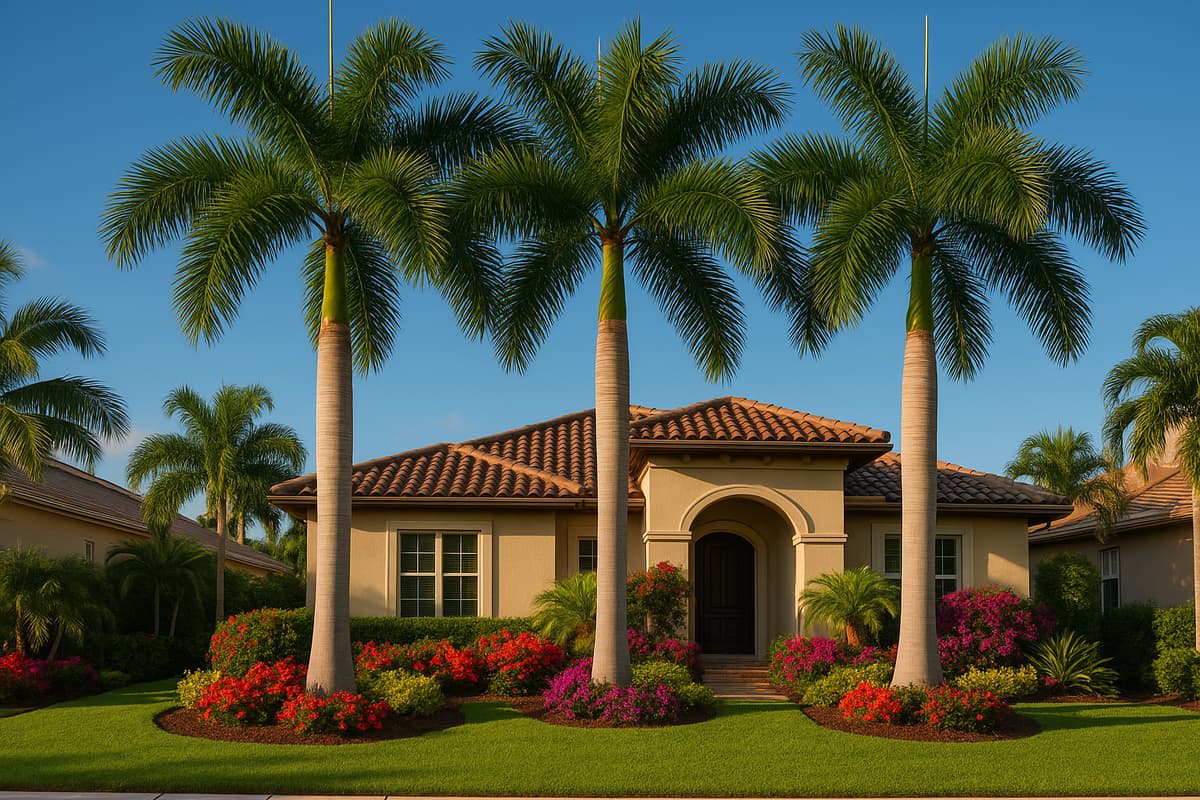
How much does palm tree trimming cost?
How much does palm tree trimming cost?
$100 – $500 per tree
$75 – $150 per small palm (under 15 ft)
$250 – $400 per tall palm (30–60 ft)

Average palm tree trimming cost
Palm tree trimming costs $100 to $500 per tree on average. Most homeowners pay around $250 for a single mid-height palm. The final price depends on the tree's height, condition, accessibility, and your location. Taller palms requiring bucket trucks or specialized climbing gear will cost significantly more than short, easy-to-reach trees.
| Tree height | Average cost per tree |
|---|---|
| Small palms (under 15 feet) | $75 – $150 |
| Medium palms (15 to 30 feet) | $150 – $250 |
| Tall palms (30 to 60 feet) | $250 – $400 |
| Very tall palms (over 60 feet) | $400 – $700+ |
| National average | $250 |
These prices typically include frond removal, seed pod trimming, and basic debris cleanup. The number of trees you need trimmed at one time, the species of palm, and your region's labor rates all play a role in the final bill.
Cost by tree height
Height is the single biggest driver of palm tree trimming costs. Taller trees demand more advanced equipment, greater physical risk for the crew, and longer work times. Here's a closer look at what to expect in each height category.
| Height category | Typical species | Cost per tree |
|---|---|---|
| Under 15 feet | Pygmy date palm, sago palm | $75 – $150 |
| 15 – 30 feet | Queen palm, pindo palm | $150 – $250 |
| 30 – 60 feet | Mexican fan palm, date palm | $250 – $400 |
| 60 – 80+ feet | Royal palm, Washingtonia robusta | $400 – $700+ |
Small palms (under 15 feet)
Short palms are the least expensive to trim because a crew can often reach the canopy with a ladder or even from the ground. Most jobs take less than 30 minutes per tree, keeping labor costs low. Expect to pay $75 to $150 per tree.
Medium palms (15 to 30 feet)
At this height, trimming usually requires an extension ladder or climbing spikes. The job takes a bit longer and carries more risk, pushing costs to $150 to $250 per tree. Queen palms and smaller coconut palms commonly fall into this range.
Tall palms (30 to 60 feet)
Palms in this range often need a bucket truck, which increases both equipment and crew costs. Mexican fan palms and true date palms frequently grow to this height. Budget $250 to $400 per tree.
Very tall palms (over 60 feet)
The tallest palms require professional climbers with harness systems or an aerial lift. Trimming at this height is time-intensive and carries the greatest safety risk. Prices start around $400 and can exceed $700 per tree when conditions are challenging.
Factors that affect the cost
Several variables beyond height influence what you'll pay for palm tree trimming. Understanding these factors helps you anticipate your quote and negotiate fairly with contractors.
| Factor | Impact on cost |
|---|---|
| Tree height | Biggest driver; taller trees cost more |
| Tree condition | Overgrown or neglected palms add 20% – 50% to the price |
| Accessibility | Tight spaces or nearby power lines increase cost |
| Number of trees | Bulk discounts of 10% – 25% are common |
| Palm species | Species with heavy fruit clusters (date palms) cost more |
| Location/season | Peak-season rates can be 15% – 30% higher |
Tree condition
A palm that has been neglected for several years will have a dense skirt of dead fronds, dried seed pods, and possibly pest infestations. Clearing this heavy buildup takes significantly more labor than a routine annual trim. Overgrown palms can cost 20% to 50% more than well-maintained ones.
Accessibility
Trees located in open yards near the street are the easiest to service. If your palm sits behind a fence, between buildings, near power lines, or on a slope, the crew needs extra time and safety precautions. Proximity to utility lines may even require coordination with the power company, adding both time and expense.
Number of trees
Most tree service companies offer a per-tree discount when you schedule multiple palms at once. Trimming five or more trees in a single visit can reduce the per-tree cost by 10% to 25% because the crew is already on-site with equipment deployed.
Palm species
Some species are harder to work with than others. Date palms produce large, heavy fruit clusters that need careful removal. Canary Island date palms have thick, spiny fronds that slow the trimming process. Simpler species like queen palms are faster and less costly to maintain.
Location and seasonal demand
In warm-climate states like Arizona, Florida, California, and Texas, late spring and early summer are the busiest months for palm trimming crews. Scheduling during peak season may mean higher prices and longer wait times. Off-season appointments in fall or early winter can be 15% to 30% cheaper.
What's included in the price
A reputable palm trimming service includes more than just cutting a few fronds. Knowing what your quote covers helps you compare bids and avoid surprise charges.
| Service | Typically included? |
|---|---|
| Dead frond removal | Yes |
| Seed pod and flower stalk removal | Yes |
| Proper pruning cuts to protect tree health | Yes |
| Debris hauling and yard cleanup | Usually yes |
| Palm skinning (boot removal) | No, charged separately |
| Stump grinding (after removal) | No, charged separately |
Standard palm trimming covers the safe removal of dead, dying, and excess fronds along with any seed pods or fruit stalks. Crews make clean cuts at the correct angle to avoid damaging the trunk or exposing the tree to disease.
Most quotes also include debris hauling, which means the crew loads cut fronds and organic material onto their truck and disposes of it. Some companies charge extra for hauling on very large jobs, so confirm this detail before signing a contract.
Before hiring any tree service, request an itemized written estimate that specifies which services are included and which carry additional fees. This protects you from unexpected charges on the final invoice.
Additional costs to consider
Beyond the base trimming fee, a few add-on services may increase your total bill. These extras are optional in most cases but necessary in certain situations.
| Service | Average cost |
|---|---|
| Palm skinning (boot removal) | $50 – $100 per tree |
| Stump grinding (after palm removal) | $150 – $400 |
| Emergency storm trimming | $300 – $1,000+ |
| Full palm tree removal | $200 – $1,500 |
| Extra debris hauling | $50 – $150 per load |
Palm skinning
Palm skinning is a cosmetic procedure where old leaf bases (called "boots") are stripped from the trunk to create a smooth, polished appearance. It is not essential for tree health but is popular in manicured landscapes. Expect to pay an additional $50 to $100 per tree.
Stump grinding
If you are having a palm removed entirely, the stump left behind needs grinding to prevent regrowth and eliminate a tripping hazard. Stump grinding costs $150 to $400 depending on the stump's diameter and root system.
Emergency trimming
Severe storms can break fronds, split trunks, or leave palms dangerously leaning over structures. Emergency service carries a premium because of the urgent response time and hazardous working conditions. Expect to pay $300 to $1,000 or more depending on the severity.
Full palm tree removal
When a palm is dead, diseased, or poses an ongoing safety risk, removal is the better option. Full tree removal costs $200 to $1,500 per tree, with the price scaling up for taller palms and difficult access.
How often to trim palm trees
Most palm trees need trimming once per year to stay healthy and attractive. Some fast-growing or heavy-fruiting species benefit from twice-yearly maintenance. Over-trimming, however, is just as harmful as neglect; removing too many green fronds starves the tree of nutrients.
| Palm species | Recommended trimming frequency |
|---|---|
| Mexican fan palm | Once per year |
| Queen palm | Once per year |
| Date palm | Once to twice per year |
| Canary Island date palm | Every 1 to 2 years |
| Coconut palm | Once to twice per year |
| Royal palm | Once per year |
The best time to schedule trimming is late spring or early summer when the tree's growth cycle is most active. Trimming before monsoon season or hurricane season in applicable regions also reduces the risk of frond-related storm damage.
Never remove more green fronds than the tree produces in a single year. "Hurricane cutting," where a palm is trimmed to just a few fronds at the top, weakens the tree and can lead to nutrient deficiency, disease, or even death. A healthy palm should retain a full, rounded canopy.
DIY vs. professional trimming
Hiring a professional is almost always the safer and more cost-effective choice, especially for palms taller than 15 feet. While a DIY approach saves on labor costs, the risks and equipment requirements make it impractical for most homeowners.
| Consideration | DIY | Professional |
|---|---|---|
| Cost | $20 – $80 (tools only) | $100 – $500+ per tree |
| Safety risk | High (falls, cuts, electrical hazards) | Low (trained crew, insurance) |
| Equipment needed | Pole saw, ladder, safety gear | Provided by the company |
| Tree health protection | Risk of improper cuts | Correct pruning techniques |
| Debris removal | You handle it | Included in most quotes |
| Suitable tree height | Under 15 feet | Any height |
When DIY makes sense
If you have a small palm under 15 feet, you can safely trim dead fronds with a sharp pole saw or hand pruner while standing on the ground. Wear heavy gloves, safety glasses, and long sleeves to protect yourself from sharp frond edges and falling debris. Never climb a palm without professional training and gear.
When to hire a professional
For any palm over 15 feet, near power lines, or in a difficult-to-reach location, hire a licensed and insured tree service. Professional crews carry liability insurance that covers property damage and injuries. They also know how to prune correctly to protect the tree's long-term health.
When evaluating companies, verify that they carry both general liability insurance and workers' compensation. Ask for references, check online reviews, and get at least three written quotes before committing.
How to save money on palm tree trimming
A few simple strategies can keep your palm tree maintenance budget in check without sacrificing quality.
| Strategy | Potential savings |
|---|---|
| Schedule during the off-season | 15% – 30% |
| Bundle multiple trees in one visit | 10% – 25% per tree |
| Keep a regular annual trimming schedule | Avoids costly overgrowth cleanup |
| Get at least three quotes | Identifies the best market rate |
| Coordinate with neighbors | Shared mobilization fees reduce cost |
Schedule in the off-season. Booking your trimming for fall or early winter, when demand is lower, can save you 15% to 30% on labor costs.
Bundle multiple trees. If you have several palms, schedule them all for the same visit. Bulk pricing can reduce the per-tree cost by 10% to 25%.
Maintain a consistent schedule. Annual trimming prevents the kind of heavy overgrowth that requires extra time and labor to clear. Skipping years often costs more in the long run.
Get multiple quotes. Prices can vary significantly between companies. Collect at least three written estimates and compare what each one includes. The cheapest quote is not always the best value if it excludes debris removal or relies on untrained workers.
Coordinate with neighbors. If nearby properties also need palm trimming, book as a group. Companies often offer reduced rates when they can service multiple homes on the same street in a single trip.
Frequently asked questions
How much does it cost to trim one palm tree?
Trimming a single palm tree costs $100 to $500 on average, with most homeowners paying around $250. The price depends primarily on the tree's height, condition, and accessibility. Small palms under 15 feet are the least expensive at $75 to $150.
Why is tall palm tree trimming so expensive?
Tall palms require specialized equipment like bucket trucks or climbing harnesses. The work is physically demanding, time-consuming, and carries a higher safety risk. These factors combine to make palms over 60 feet the most expensive to trim, often costing $400 to $700 or more.
When is the best time to trim palm trees?
Late spring through early summer is the ideal time for trimming because palms are in their active growth phase. Trimming before storm season also reduces the risk of wind damage from loose fronds. For the best pricing, book during fall or early winter when demand is lower.
Can you trim a palm tree too much?
Yes. Removing too many green fronds deprives the tree of the nutrients it needs to grow. A practice known as "hurricane cutting," where nearly all fronds are removed, can weaken or kill the tree. Only dead, dying, or broken fronds should be removed during a trim.
Can I trim my own palm tree?
You can safely trim small palms under 15 feet using a pole saw from the ground. For any tree taller than that, professional service is strongly recommended. Climbing palms without proper training and equipment is extremely dangerous and accounts for numerous injuries each year.
How often do palm trees need trimming?
Most palm species need trimming once a year. Fast-growing varieties like Mexican fan palms should be trimmed annually, while slower-growing species like Canary Island date palms may only need attention every one to two years. Date palms with heavy fruit production often benefit from trimming twice per year.
How much does it cost to remove a palm tree entirely?
Full palm tree removal costs $200 to $1,500 depending on the tree's height and location. Stump removal adds another $150 to $400. Removal is recommended when a palm is dead, severely diseased, or poses a structural hazard to nearby buildings.