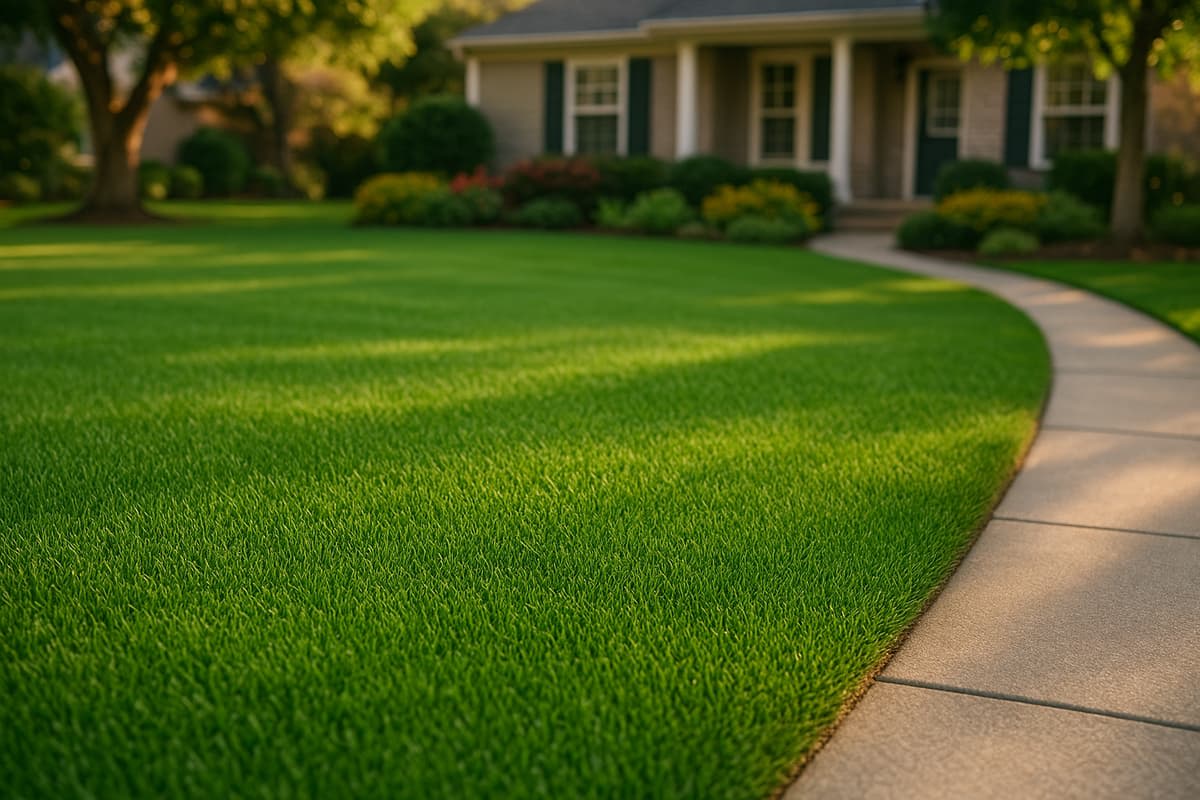
How much does zoysia sod cost?
How much does zoysia sod cost?
$0.35 – $0.75 per square foot (sod only)
$280 – $380 per pallet
$1.00 – $2.00 per square foot installed

Average zoysia sod cost
Zoysia sod costs $0.35 to $0.75 per square foot for the grass alone, or $280 to $380 per pallet covering roughly 450 to 500 square feet. When you add professional installation, expect to pay $1.00 to $2.00 per square foot total. For a standard 5,000-square-foot lawn, that puts your all-in budget between $5,000 and $10,000.
Prices vary depending on the zoysia variety, your region, the size of your order, and whether the project includes soil preparation and grading. Premium cultivars like Empire Zoysia sit at the top of the price range, while common varieties like Emerald or Palisades are more affordable.
| Measurement | Average Cost |
|---|---|
| Per square foot (sod only) | $0.35 – $0.75 |
| Per 10 sq. ft. roll | $3.50 – $7.50 |
| Per pallet (450 – 500 sq. ft.) | $280 – $380 |
| Per square foot (installed) | $1.00 – $2.00 |
| 5,000 sq. ft. lawn (installed) | $5,000 – $10,000 |
| 10,000 sq. ft. lawn (installed) | $10,000 – $20,000 |
Cost by zoysia variety
Not all zoysia grass is priced the same. The cultivar you choose affects both the upfront material cost and long-term maintenance expenses. Fine-bladed, specialty varieties bred for golf courses and high-end landscapes typically cost more than standard residential options.
| Zoysia Variety | Blade Type | Best Use | Cost per Pallet |
|---|---|---|---|
| Emerald Zoysia | Fine | Residential, landscaping | $280 – $380 |
| Palisades Zoysia | Medium | Residential, commercial | $280 – $380 |
| Zorro Zoysia | Fine | Golf, commercial, residential | $280 – $380 |
| Empire Zoysia | Medium | Residential, commercial | $368+ |
| Zenith Zoysia | Medium | Residential (cold-tolerant) | $260 – $350 |
| Innovation Zoysia | Fine | Golf, residential | $300 – $400 |
Below is a closer look at each popular variety, including its strengths and typical pricing.
Emerald Zoysia
Often called the "Cadillac" of zoysias, Emerald is the most widely used fine-textured variety in the southern United States. It produces a dense, carpet-like lawn with a dark green color. Emerald thrives in moderate shade and full sun, making it versatile for most residential landscapes. Expect to pay $280 to $380 per pallet.
Palisades Zoysia
Developed at Texas A&M University, Palisades has become a favorite for homeowners and landscape architects seeking a distinctive lawn grass. Its medium blade width gives it a slightly more casual look than Emerald while still delivering excellent density and drought tolerance. Palisades costs $280 to $380 per pallet.
Empire Zoysia
Empire is a patented, medium-bladed cultivar known for its soft texture, dark green color, and ease of maintenance. It establishes quickly compared to other zoysias and handles foot traffic well. As a premium variety, Empire is priced higher at around $368 per pallet or more.
Zorro Zoysia
Zorro holds the distinction of being the number-one ranked zoysia grass in the world. Its fine blade and rich dark green color make it ideal for golf courses, commercial properties, and upscale residential lawns. Zorro runs $280 to $380 per pallet, depending on location and order size.
Zenith Zoysia
Zenith stands out for its cold tolerance, making it a strong choice for transitional climates from New York down through the Carolinas. It is bred to resist drought and disease while requiring less fertilizer and mowing than Kentucky bluegrass or tall fescue. Zenith is one of the more budget-friendly options at roughly $260 to $350 per pallet.
Zoysia sod cost per pallet
Most sod farms sell zoysia by the pallet, which covers 450 to 500 square feet depending on the supplier and roll dimensions. A single pallet typically costs $280 to $380, though premium varieties like Empire can exceed $368. Understanding pallet pricing helps you estimate how many pallets your project requires.
| Lawn Size (sq. ft.) | Pallets Needed | Estimated Sod Cost |
|---|---|---|
| 1,000 | 2 | $560 – $760 |
| 2,500 | 5 | $1,400 – $1,900 |
| 5,000 | 10 | $2,800 – $3,800 |
| 7,500 | 15 | $4,200 – $5,700 |
| 10,000 | 20 | $5,600 – $7,600 |
Order 5% to 10% more sod than your measured square footage. You will need extra material to account for cutting waste around curves, garden beds, walkways, and irregular edges.
Zoysia sod installation cost
Professional installation adds $0.50 to $1.25 per square foot on top of your material cost. A full-service project that includes removing the old lawn, grading the soil, amending the dirt, and laying new sod costs $1.00 to $2.00 per square foot total. For a 9,500-square-foot yard, real-world quotes run around $12,000 to $15,000 or more for the complete job.
| Service | Cost per Sq. Ft. |
|---|---|
| Sod material only | $0.35 – $0.75 |
| Labor (laying sod) | $0.30 – $0.60 |
| Old lawn removal | $0.10 – $0.30 |
| Soil grading and prep | $0.15 – $0.35 |
| Delivery fee (per pallet) | $50 – $150 flat |
| Total installed | $1.00 – $2.00 |
DIY vs. professional installation
Installing zoysia sod yourself can save 30% to 50% of total project costs. You will still pay for materials, delivery, and any equipment rentals like a sod cutter or rototiller. However, DIY installation requires significant physical labor, and improper soil preparation can cause poor root establishment, wasted sod, and long-term lawn problems.
Professional installers bring grading equipment, soil expertise, and a labor crew that can complete a 5,000-square-foot lawn in a single day. For large or complex yards with slopes, drainage issues, or extensive old lawn removal, hiring a pro is usually worth the added expense.
Soil preparation costs
Proper soil prep is the single most important step for zoysia sod success. The existing lawn must be killed off (chemically or mechanically), the area graded for proper drainage, and the topsoil amended if necessary. Soil testing runs $15 to $50, and adding topsoil or compost costs $20 to $60 per cubic yard.
Grading alone can cost $500 to $2,000 depending on yard size and terrain. Skipping this step often leads to drainage problems, uneven settling, and bare patches that require costly rework.
| Soil Prep Task | Average Cost |
|---|---|
| Soil testing | $15 – $50 |
| Topsoil or compost | $20 – $60 per cubic yard |
| Grading | $500 – $2,000 |
Factors that affect zoysia sod prices
Your final cost depends on several variables beyond just the grass variety. Location, order quantity, time of year, and site conditions all influence pricing significantly.
| Factor | Impact on Price |
|---|---|
| Grass variety | Premium cultivars cost 15% to 30% more |
| Order quantity | Bulk orders (10+ pallets) may qualify for discounts |
| Region | Southern states typically cheaper; northern transition zones higher |
| Time of year | Peak season (spring/summer) can increase prices 10% to 20% |
| Site accessibility | Difficult access adds $0.10 to $0.25 per sq. ft. |
| Soil condition | Poor soil requiring amendment adds $0.15 to $0.50 per sq. ft. |
| Delivery distance | Longer hauls increase delivery fees by $50 to $200 |
Regional pricing differences
Zoysia sod is grown primarily in the southern United States, so homeowners in Texas, Florida, Georgia, and the Carolinas benefit from lower prices and more supplier options. If you live in a transitional climate zone (like the Mid-Atlantic or lower Midwest), you may pay 10% to 25% more due to limited local availability and higher shipping costs.
Seasonal pricing
The best time to lay zoysia sod is late spring through early summer, when the grass actively grows and establishes roots quickly. This is also peak demand season, so prices tend to climb. Ordering in early spring or early fall (in warmer climates) can sometimes yield better pricing and easier scheduling with installers.
Order size
Larger orders often qualify for per-pallet discounts. If your project requires 10 or more pallets, ask your supplier about volume pricing. Some sod farms also offer free or reduced-cost delivery for large orders within a certain radius.
Benefits of zoysia grass
Zoysia is one of the most versatile warm-season grasses available, offering a combination of beauty, durability, and low maintenance that few other turf types can match. Its dense growth habit naturally crowds out weeds, and its deep root system provides excellent drought tolerance.
| Benefit | Details |
|---|---|
| Drought tolerance | Deep roots survive extended dry periods |
| Shade tolerance | Performs well in moderate to heavy shade |
| Low maintenance | Requires less mowing, fertilizer, and water than many grasses |
| Weed resistance | Dense growth crowds out weeds naturally |
| Foot traffic durability | Recovers well from heavy use |
| Disease resistance | Naturally resistant to many common turf diseases |
| Cold tolerance | Some varieties survive into USDA zone 5 |
Shade performance
Unlike bermuda grass, which demands full sun, zoysia performs well in areas that receive 3 to 4 hours of direct sunlight. Varieties like Emerald and Zorro handle moderate to heavy shade, making them ideal for lawns with mature trees.
Drought and water needs
Established zoysia lawns typically need 1 inch of water per week, roughly 30% to 50% less than Kentucky bluegrass or tall fescue. During severe drought, zoysia goes dormant and turns brown, then recovers quickly once moisture returns. A properly designed sprinkler system can help ensure your zoysia lawn receives consistent, efficient watering.
Winter dormancy
Zoysia is a warm-season grass that turns completely brown after the first frost in fall. It returns to its lush green color once temperatures consistently reach the mid-60s°F in spring, typically March or April. This dormancy period is cosmetic only and does not harm the grass.
If winter color is important to you, consider overseeding your zoysia lawn with annual ryegrass in the fall. This provides green color through winter but adds $0.05 to $0.15 per square foot in seed and application costs.
Zoysia lawn maintenance costs
One of zoysia's biggest selling points is its relatively low ongoing maintenance cost. Annual lawn care expenses for a zoysia lawn run $500 to $1,500 for a typical 5,000-square-foot property, which is 20% to 40% less than cool-season grasses like Kentucky bluegrass.
| Maintenance Task | Frequency | Annual Cost (5,000 sq. ft.) |
|---|---|---|
| Mowing | Weekly (growing season) | $600 – $1,200 |
| Fertilizing | 2 – 3 times per year | $100 – $300 |
| Weed control | 1 – 2 applications per year | $75 – $200 |
| Aeration | Once per year | $75 – $200 |
| Watering | As needed | $50 – $150 |
| Dethatching | Every 2 – 3 years | $150 – $400 |
Mowing requirements
Zoysia grows slowly compared to bermuda grass, so you will mow less frequently. During peak growing season, mowing every 7 to 10 days at a height of 1 to 2 inches keeps the lawn looking its best. A reel mower produces the cleanest cut on fine-bladed varieties like Emerald and Zorro.
Thatch management
Zoysia tends to build thatch (a layer of dead organic material between the soil and green blades) more than some other grasses. When thatch exceeds half an inch, water and nutrients struggle to reach the roots. Dethatching or verticutting every two to three years keeps this in check and costs $150 to $400 for a professional service. Annual lawn aeration also helps reduce thatch buildup and improve root health.
Zoysia vs. other grass types
Choosing between zoysia and other popular sod options comes down to your climate, shade conditions, maintenance preferences, and budget. Zoysia sits in the mid-to-upper price range for sod, but its lower long-term maintenance costs often make it more affordable over the life of the lawn.
| Grass Type | Sod Cost per Sq. Ft. | Shade Tolerance | Drought Tolerance | Maintenance Level |
|---|---|---|---|---|
| Zoysia | $0.35 – $0.75 | Good | High | Low to moderate |
| Bermuda | $0.25 – $0.55 | Poor | High | High |
| St. Augustine | $0.30 – $0.65 | Very good | Moderate | Moderate |
| Kentucky bluegrass | $0.30 – $0.60 | Moderate | Low | High |
| Tall fescue | $0.25 – $0.55 | Good | Moderate | Moderate |
| Centipede | $0.25 – $0.50 | Moderate | Moderate | Low |
Zoysia vs. bermuda grass
Bermuda grass costs less upfront and grows aggressively, making it great for high-traffic sports fields. However, bermuda requires full sun, frequent mowing, and more fertilizer. Zoysia's shade tolerance, slower growth rate, and softer texture make it the better choice for most residential lawns.
Zoysia vs. St. Augustine
St. Augustine offers superior shade tolerance and establishes quickly. Zoysia, on the other hand, handles cold weather better and requires less water. St. Augustine is also more susceptible to chinch bugs and certain diseases. For homeowners in the transition zone, zoysia is the safer bet.
Zoysia vs. tall fescue
Tall fescue is a cool-season grass that stays green year-round in northern climates but struggles in southern heat. Zoysia goes dormant in winter but thrives in summer. In transition zones where both grasses can survive, zoysia offers better density, drought tolerance, and weed resistance.
Where to buy zoysia sod
You can purchase zoysia sod from local sod farms, garden centers, home improvement stores, and online turf suppliers. Buying directly from a sod farm typically offers the freshest product and lowest per-pallet pricing. Online retailers and local nurseries ship pallets regionally for added convenience.
| Source | Typical Price per Pallet | Pros |
|---|---|---|
| Local sod farm | $250 – $380 | Freshest sod, best bulk pricing |
| Home improvement store | $300 – $400 | Convenient, small quantities available |
| Online turf supplier | $280 – $400 | Wide variety selection, delivery included |
| Landscape supply yard | $270 – $380 | Often paired with soil and mulch delivery |
Always inspect sod before accepting delivery. Fresh zoysia sod should have a consistent green color, moist (not soggy) soil, and no yellowing or heat damage. Sod left on a pallet for more than 24 to 48 hours in warm weather can begin to deteriorate.
Buying small quantities
If you only need to patch a small area, some nurseries and garden centers sell zoysia sod by the individual roll or piece. Expect to pay around $2.50 to $2.60 per square foot for 10-square-foot rolls purchased individually, which is significantly more per square foot than buying by the pallet. A minimum order of 100 square feet (10 pieces) is common for small-quantity purchases.
Zoysia plugs and seed alternatives
If sod pricing is beyond your budget, zoysia plugs and seed offer cheaper alternatives, though both require much longer establishment periods.
- Zoysia plugs: Cost $0.10 to $0.30 per plug, planted 6 to 12 inches apart. Full coverage takes 1 to 2 growing seasons.
- Zoysia seed: Costs $30 to $60 per pound, covering about 500 square feet. Germination takes 14 to 21 days, with full coverage in 1 to 2 seasons.
- Zoysia sod: Costs $0.35 to $0.75 per square foot but provides an instant lawn.
| Planting Method | Cost | Time to Full Coverage |
|---|---|---|
| Sod | $0.35 – $0.75 per sq. ft. | Instant (2–3 weeks to root) |
| Plugs | $0.10 – $0.30 per plug | 1 – 2 growing seasons |
| Seed | $30 – $60 per lb. (covers ~500 sq. ft.) | 1 – 2 growing seasons |
Frequently asked questions
How much does a pallet of zoysia sod cost?
A pallet of zoysia sod costs $280 to $380 on average. Premium varieties like Empire Zoysia can cost $368 or more per pallet. Each pallet covers approximately 450 to 500 square feet.
How much is zoysia sod per square foot?
Zoysia sod costs $0.35 to $0.75 per square foot for the material alone. With professional installation, total costs rise to $1.00 to $2.00 per square foot depending on site conditions and your location.
Is zoysia sod more expensive than bermuda?
Yes, zoysia sod is typically 20% to 40% more expensive than bermuda sod. Bermuda costs $0.25 to $0.55 per square foot, while zoysia runs $0.35 to $0.75 per square foot. However, zoysia's lower maintenance requirements can offset the higher upfront cost over time.
When is the best time to install zoysia sod?
The ideal installation window is late spring through early summer, when soil temperatures consistently reach 70°F or higher. This allows the grass to establish strong roots before winter dormancy. In the Deep South, you can install zoysia sod from April through September.
Does zoysia grow well in shade?
Zoysia is one of the most shade-tolerant warm-season grasses. Most varieties perform well with 3 to 4 hours of direct sunlight per day. Emerald, Zorro, and Palisades are particularly well-suited for partially shaded lawns.
How long does zoysia sod take to establish?
Zoysia sod typically takes 2 to 3 weeks to root into the soil and 4 to 6 weeks before it can handle regular foot traffic. Full density and maximum root depth develop over the first full growing season. Consistent watering during the first two weeks is critical.
How many pallets of sod do I need?
Divide your total square footage by the pallet coverage (usually 450 to 500 square feet), then add 5% to 10% for cutting waste. For example, a 5,000-square-foot lawn requires approximately 10 to 11 pallets of zoysia sod.